Working in China
Employment Background Checks in China: A Guide for Foreign Candidates
How foreign candidates in China can prepare for employment background checks, verify consent, organize records, explain discrepancies, and protect personal data.
Rules and procedures can change. Check the linked official sources before acting on time-sensitive information.
Quick answer
What you need to know
Ask what will be checked and why, provide consistent records through an authorized channel, explain discrepancies early, and keep a copy of every consent and submission.
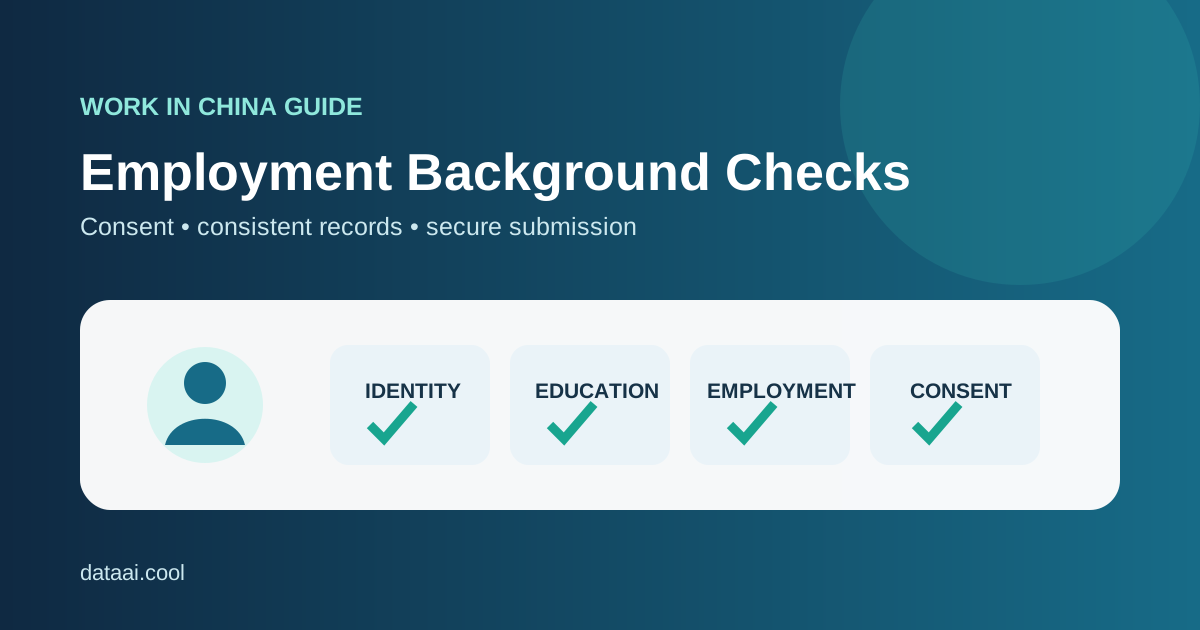
- A background check may cover identity, education, employment, references, qualifications, or other role-specific information.
- Names, dates, translations, and passport changes should be reconciled before documents are submitted.
- Candidates should understand the consent, recipient, retention period, correction route, and cross-border handling of personal information.
- Ask HR, the screening provider, and a qualified adviser to clarify material or sensitive requests.
An employment background check can become complicated when a candidate has studied and worked in several countries, changed passports, used different name formats, or cannot obtain an old employer’s standard letter. A controlled evidence file makes the process easier for both the candidate and hiring team.
This guide is general information, not legal or employment advice. Screening scope and data-handling obligations depend on the role, employer, provider, location, and information involved.
Ask for the scope before submitting records
Request a written checklist stating the categories to be checked, the purpose, the screening provider, submission channel, deadline, and HR contact. Clarify whether the check is a condition of an offer, work-permit preparation, a regulated-role requirement, or an internal policy step.
Do not assume that every request is standard. Ask why sensitive or unrelated information is necessary and whether a less intrusive document can meet the same purpose. Read the consent notice and privacy statement before signing.
Build a consistent timeline
Create a month-by-month table of education, employment, unemployment, travel, and other gaps requested by the form. Use the same legal name, employer names, job titles, and dates across the application, résumé, reference form, and supporting documents.
If a passport or name changed, attach a short explanation and the linking record. The name consistency guide has a practical reconciliation method. Never alter a record to force a match.
Prepare evidence by category
For education, keep the diploma, degree, transcript when relevant, verification or authentication record, and a clear translation if requested. For employment, keep contracts, separation or experience letters, payslips, tax or social-insurance evidence where appropriate, and current contact details for authorized references.
Ask referees before sharing their details. Tell them the role, expected contact method, and facts they may be asked to confirm. The employment verification letter guide explains how to request a useful letter.
When an organization has closed or will not respond, tell the screening provider rather than waiting for the deadline. Offer credible alternatives and ask which evidence it accepts.
Protect personal information
Use the designated portal or company-approved encrypted channel. Watermark a copy where appropriate without obscuring required fields, and keep a submission log. Avoid posting identity documents in large chat groups or sending them to an unverified personal account.
Ask who controls the information, which third parties receive it, whether it leaves China, how long it is retained, and how to request access or correction. China’s Personal Information Protection Law establishes general principles for personal-information processing, but a qualified privacy professional should interpret a specific case.
Respond to a discrepancy
Ask for the exact item and source rather than guessing. Reply with a concise factual explanation, the correct information, and dated evidence. Common causes include translated employer names, group-company changes, month-versus-day date formats, unpaid internships, and passport name order.
Do not pressure a former colleague to confirm something untrue. If the result threatens an offer or employment relationship, preserve the offer, consent, report correspondence, correction request, and decision notice, then obtain qualified advice.
Background check checklist
- Written scope, purpose, provider, deadline, and HR owner received.
- Consent and privacy notices reviewed and saved.
- Identity, education, and employment timelines reconciled.
- Name and passport changes explained with linking records.
- Referees notified and authorized.
- Missing records raised early with alternative evidence.
- Sensitive files sent only through an approved channel.
- Every upload and response logged.
- Discrepancies answered factually without changing originals.
- High-impact disputes reviewed by HR or a qualified adviser.
Official reference points
- Personal Information Protection Law, National People’s Congress
- China Government: Working in China
- Ministry of Education Service Center for Scholarly Exchange
Requirements and verification channels change. Confirm the current checklist with the employer, provider, responsible authority, and a qualified professional before relying on a document strategy.
Frequently asked questions
Common questions
What documents may a China employer request for a background check?
The list depends on the role and employer, but may include identity, education, qualification, employment, and reference records. Ask HR for a written, role-specific checklist.
What if my former employer no longer exists?
Tell the recruiter early and offer alternative evidence such as contracts, separation letters, payroll or tax records, and a former manager's contact details, subject to privacy rules.
Should I send a passport scan through personal chat?
Use the employer's approved secure channel. Ask who receives the file, why it is needed, how long it is retained, and how corrections or deletion requests are handled.
Can a discrepancy automatically cancel an offer?
Outcomes depend on the facts, the offer terms, company policy, and applicable rules. Respond factually, provide supporting evidence, and seek qualified advice for a consequential dispute.