Working in China
Employee Inventions and Intellectual Property in China: A Records Guide for Foreign Staff
Help foreign employees document inventions, code, designs, publications, confidential material, approvals, and ownership questions while working in China.
Rules and procedures can change. Check the linked official sources before acting on time-sensitive information.
Quick answer
What you need to know
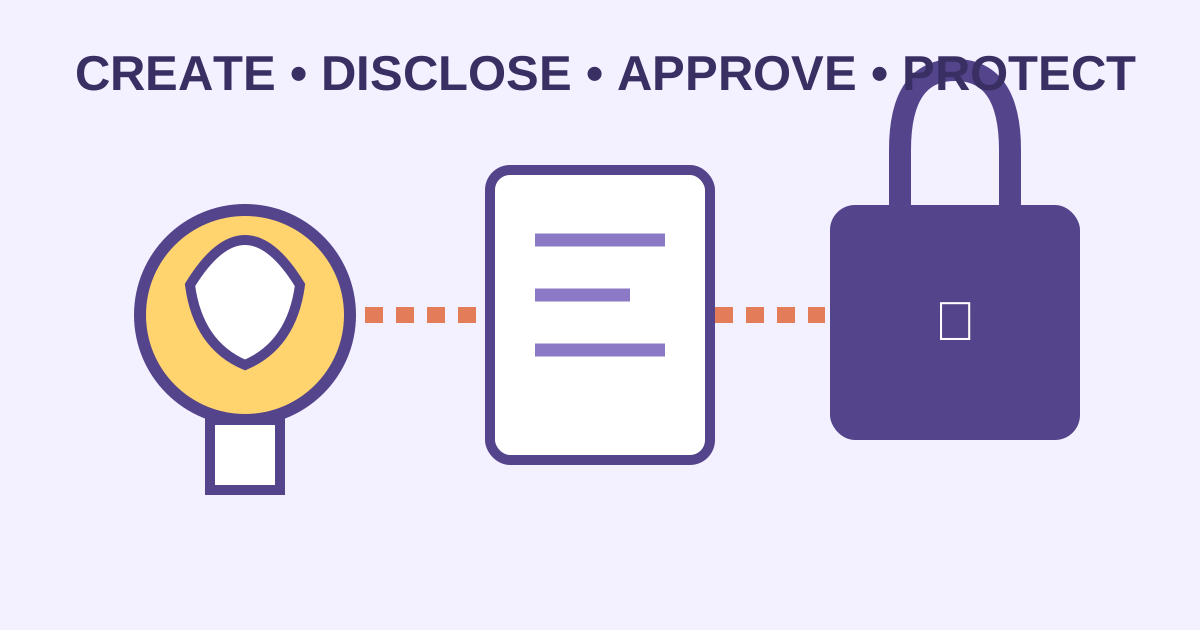
Before creating or publishing work-related material, map the contract, company policy, disclosure channel, contributors, source materials, approvals, and ownership advice.
- Read employment, invention, confidentiality, open-source, publication, and security rules together.
- Keep a dated factual record of contributors, source materials, approvals, disclosures, and releases.
- Do not move company files into personal accounts or reuse confidential material in a portfolio.
- Get qualified advice when ownership, compensation, cross-border rights, or post-employment use is disputed.
Foreign employees in research, engineering, design, software, marketing, and consulting often create valuable work across multiple countries and systems. A clean record helps the employer protect legitimate assets and helps the employee avoid accidental misuse or an unsupported ownership claim.
Map the rules before creating
Collect the employment contract, invention assignment, confidentiality agreement, employee handbook, security policy, open-source policy, publication rules, and client obligations. Note which legal entity employs you, where the work occurs, and which company or client systems contain the source material.
The non-compete and confidentiality guide explains adjacent contract questions. If documents conflict, ask HR or legal for written clarification.
Use the approved disclosure process
Ask what must be disclosed, when, to whom, and in which system. A factual record may include the problem, development dates, contributors, work location, employer resources, prior material, third-party content, and public-release status. Do not solve a record problem by emailing restricted files to yourself.
Separate a contemporaneous record from a later conclusion about ownership. The latter may require legal analysis.
Track contributors and source materials
List employees, contractors, universities, customers, and external collaborators who contributed. Preserve approvals and agreements through the responsible company system. For software and data, record repositories, component versions, licenses, datasets, models, and access permissions.
Follow company review for open-source use. A package being publicly downloadable does not eliminate its license conditions, security risks, or attribution requirements.
Get approval before publishing or presenting
Conference slides, academic papers, portfolios, social posts, demonstrations, and job interviews can reveal confidential or client information. Submit material through the employer’s publication, security, brand, and legal review process. Retain the approved version and approval record.
Use the company equipment handover guide when returning devices or leaving a role.
Handle a disagreement carefully
If ownership, inventor status, compensation, attribution, or post-employment use is unclear, preserve records and avoid public accusations or deletion. Ask the employer to state its position and the supporting documents. Consult the official National Laws and Regulations Database for published law and seek a qualified China intellectual-property or employment lawyer for advice about your facts.
IP records checklist
- Contract, policies, and client obligations collected.
- Employing entity and responsible review teams identified.
- Contributors and development dates recorded.
- Employer resources and third-party materials logged.
- Open-source or external content approved.
- Invention disclosure submitted through the correct system.
- Publication, portfolio, and presentation approval retained.
- No company data copied to an unauthorized account.
- Disputed rights reviewed by a qualified professional.
This is general record-keeping information, not legal advice. Intellectual-property outcomes depend on the work, relationships, documents, and applicable law.
Frequently asked questions
Common questions
Does my employer own everything I create?
Ownership depends on the facts, contracts, policies, and applicable law. Do not assume either universal employer ownership or universal personal ownership; obtain specific advice.
Can I show work in my portfolio?
Only after checking confidentiality, client, security, copyright, publication, and approval requirements. A public release does not automatically authorize your reuse.
What should an invention record contain?
Record the date, problem, development history, contributors, employer resources, source materials, disclosure, decisions, and approvals without copying restricted data into an unauthorized system.
Can I use open-source code at work?
Follow the employer's approval and license-review process. Preserve component, version, license, source, modification, and approval records.