Daily Life
District Heating and Winter Homes in China: A Guide for Foreign Residents
How foreign residents can understand district heating, heating fees, indoor temperature records, radiators, landlord responsibilities, safe supplemental heat, and winter home preparation in China.
Rules and procedures can change. Check the linked official sources before acting on time-sensitive information.
Quick answer
What you need to know
Prepare a China home for winter by confirming the heating system, fee and service period, documenting indoor conditions, reporting faults correctly, and using supplemental heat safely.
- Confirm whether the home uses municipal district heating, building systems, individual gas, electric units, or air-conditioning heat.
- Put the heating fee, service period, maintenance contact, and landlord responsibility in writing.
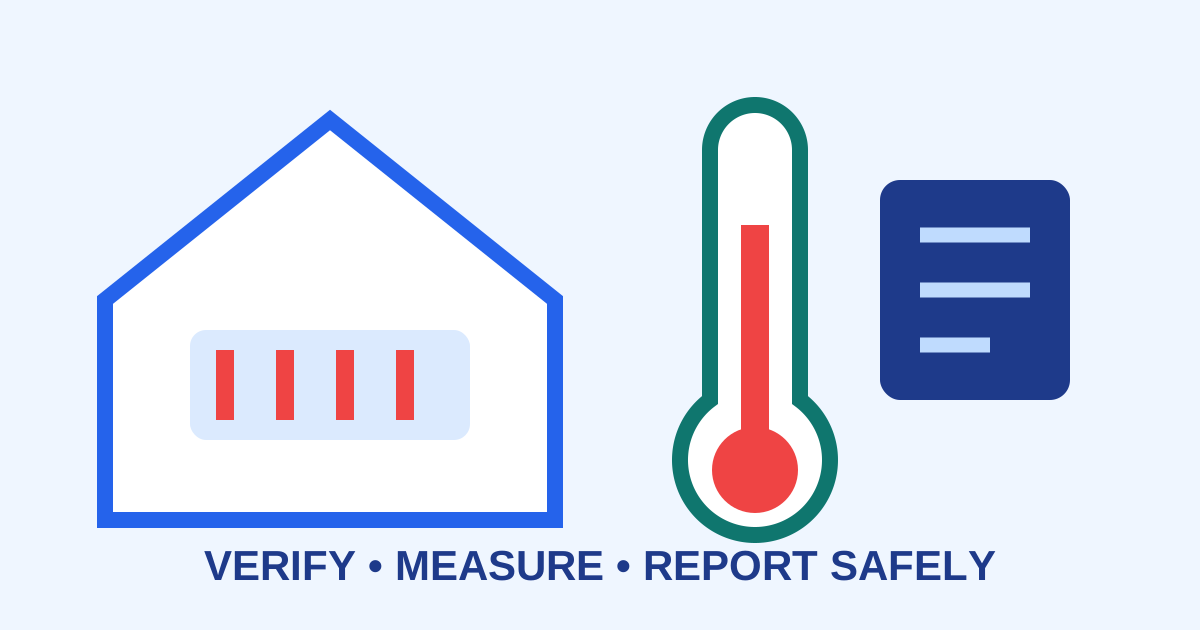
- Measure room conditions consistently and report faults before attempting radiator or boiler work.
- Use approved supplemental heaters with safe electrical loads, ventilation, and fire precautions.
Winter comfort in China depends less on a national rule than on the building you actually rent. Northern cities commonly have district or compound heating, while homes elsewhere may rely on air conditioners, electric heaters, floor systems, or individual boilers.
Identify the complete system
Before renting, ask the agent, landlord, and property office to name the heat source, demonstrate controls, and show recent bills. Check each room, radiator, thermostat, window seal, and hot-water system. Ask when the heating season normally begins and ends and how outages are reported.
Use the apartment move-in inspection guide to record the system before accepting the keys.
Put cost and responsibility in writing
Your lease should clarify who pays heating charges, whether the fee is included in rent or property management charges, how it is calculated, and who handles arrears from an earlier occupant. Request invoices or official payment records rather than relying on a verbal statement.
Save the property office’s maintenance number and the landlord’s escalation contact. The utilities guide provides a broader account-handover checklist.
Document a cold or uneven home
Use one reliable thermometer at comparable times and locations. Record the date, time, room, reading, outdoor weather, system setting, and whether other rooms or neighbors are affected. Photograph visible leaks, damaged valves, error codes, or condensation without dismantling equipment.
Send the record to both property management and the landlord. Ask for a work-order number, visit time, technician finding, and closure note. For unresolved responsibility, follow the written sequence in the landlord repairs guide.
Add heat without adding risk
Check the appliance rating, outlet condition, extension-cord limits, clearance from fabric, child and pet access, and automatic shutoff. Never place laundry on a portable heater. Combustion appliances and individual gas boilers require professional maintenance and appropriate ventilation.
This is practical home guidance, not engineering or safety certification. Follow manufacturer instructions and ask property management or a qualified technician to inspect uncertain equipment. Review the home fire safety guide before winter.
Winter home checklist
- Heat source and controls have been demonstrated.
- Heating season, fee basis, payer, and prior balance are documented.
- Radiators, thermostats, windows, and hot water were checked at move-in.
- Maintenance and escalation contacts are saved in Chinese and English.
- Cold-room records use consistent times and thermometer placement.
- Shared pipes, valves, and radiators are not modified without approval.
- Supplemental heaters match the circuit and have safe clearance.
- Humidity, ventilation, freeze risk, children, pets, and travel absences are planned for.
Official reference point
Heating standards, service dates, and complaint channels can be local. Confirm the current city and compound process with property management, the heating operator, landlord, and relevant local authority.
Frequently asked questions
Common questions
Does every apartment in China have central heating?
No. Heating systems vary substantially by climate zone, city, compound, and building. Verify the actual installed system and service arrangements before signing a lease.
Who pays the heating fee in a rented apartment?
The lease and local billing arrangement should identify the responsible party. Ask for the account name, calculation basis, service period, invoice, and proof of payment.
What should I do if the apartment stays cold?
Record dates, room temperatures, outdoor conditions, affected rooms, and photos, then report the issue to property management and the landlord through the stated maintenance channel.
Can I bleed or modify a radiator myself?
Do not alter shared heating equipment without authorization. Incorrect work can cause leaks, pressure problems, injury, or liability; ask the responsible maintenance team.