Daily Life
Choosing Chinese Language Classes in China: A Guide for Foreign Residents
Choose practical Chinese classes in China by setting goals, comparing schools and tutors, checking schedules and fees, taking a trial, and tracking progress.
Rules and procedures can change. Check the linked official sources before acting on time-sensitive information.
Quick answer
What you need to know
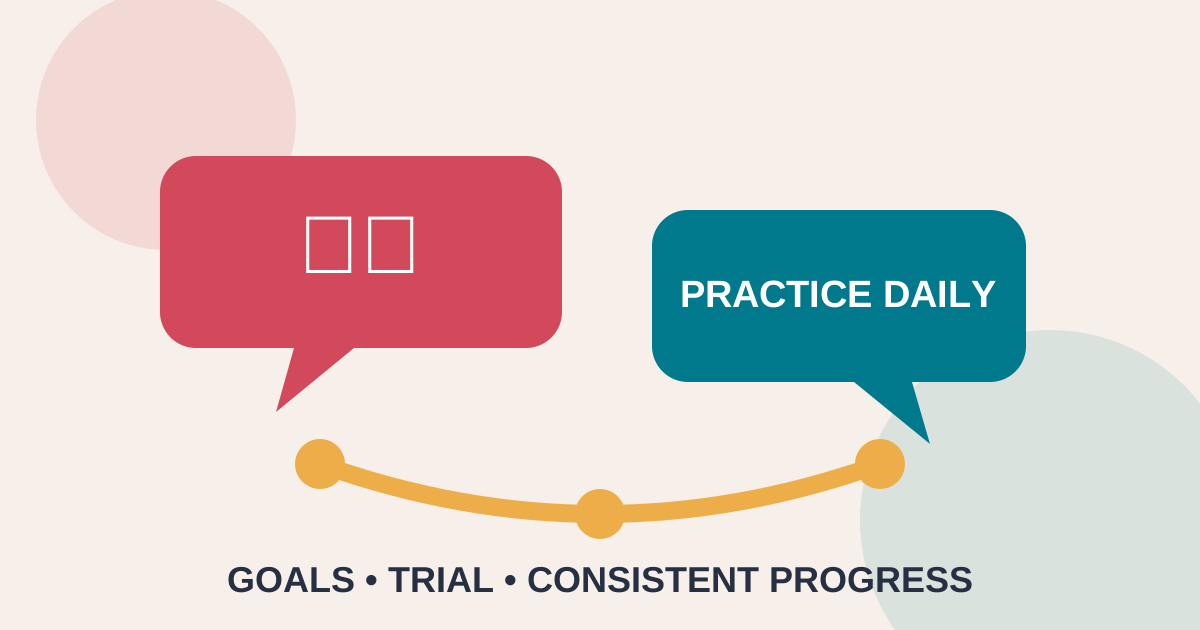
Choose a course around real communication goals, verify the provider and total commitment, test the teaching format, and combine class time with safe daily practice.
- Define a 12-week outcome such as handling deliveries, speaking with a school, or improving workplace conversation before choosing a course.
- Compare class size, teacher continuity, makeup rules, materials, location, and the full fee rather than advertised level names alone.
- Take a trial lesson and ask how placement, feedback, missed classes, refunds, and personal data are handled.
- Use short, repeated practice in daily situations and track tasks completed, not only vocabulary memorized.
The best Chinese course is not necessarily the most intensive or the one with the most impressive level chart. It is the course you can attend consistently and connect to situations you actually face in China.
Set a useful 12-week goal
Choose two or three observable outcomes: give a delivery address, explain a maintenance problem, make a clinic appointment, speak with a teacher, participate in a routine meeting, or prepare for an HSK exam. Note whether speaking, listening, characters, professional vocabulary, or test technique matters most.
Use this goal to compare university programs, private schools, community courses, online classes, employer-sponsored training, and independent tutors. If a provider claims an official affiliation, credential, or test-center status, verify the claim with the named institution. China’s Ministry of Education is a starting point for national education information; provider-specific claims still require direct verification.
Compare the complete offer
Ask each provider for:
- entry assessment and learning outcomes;
- class size, teacher qualifications, and teacher continuity;
- total contact hours and expected self-study;
- schedule, location, online backup, and minimum enrollment;
- textbook, platform, recording, and material fees;
- makeup, pause, cancellation, refund, and expiry rules;
- invoice or fapiao availability and payment recipient;
- how recordings, ID details, and student data are used.
Do not prepay a long package before taking a trial and reading the refund terms. Pay the named provider through a traceable method and keep the contract, timetable, receipt, and advertisements that influenced the purchase.
Use the trial lesson properly
Bring one real task and see whether the teacher helps you perform it. Notice speaking time, correction quality, pace, explanation language, and whether examples fit your city and daily life. Ask how progress is reviewed and what happens if the assigned teacher changes.
For workplace funding, obtain HR preapproval before paying. Confirm the spending cap, approved supplier, attendance evidence, fapiao title, reimbursement deadline, tax treatment, and any repayment condition if you leave. The workplace training certificates guide explains a useful record trail.
Turn daily life into safe practice
Practice small scripts for deliveries, taxis, repairs, restaurants, school, and clinics. Save useful phrases with context, not as isolated word lists. Repeat the same task until it is reliable, then increase complexity. Protect privacy: remove passport numbers, bank details, children’s information, medical records, and confidential employer material before uploading text to a tutor or app.
Enrollment checklist
- Write a 12-week outcome and weekly time budget.
- Compare at least two formats and take a trial.
- Confirm every fee, deadline, and refund condition.
- Check the provider name against the payment account and invoice.
- Calendar lessons and daily ten-minute practice.
- Review progress at weeks four and eight.
- Keep certificates or attendance records needed by HR.
Language helps with routine interactions but does not replace a professional interpreter for a consequential medical, legal, or official matter. The medical interpreter guide explains how to prepare for healthcare communication.
Frequently asked questions
Common questions
Should I learn HSK Chinese or practical conversation?
Choose according to the outcome. HSK preparation suits a formal test goal, while task-based conversation may help daily life sooner. Many learners combine a structured syllabus with practical scenarios.
Are private tutors better than group classes?
Private lessons offer flexible pacing and targeted correction; groups provide interaction and lower per-person cost. A trial lesson is the best way to test fit.
How many hours a week should a working adult study?
A sustainable routine matters more than a universal number. Two focused lessons plus short daily review can be more useful than an intensive plan that is quickly abandoned.
Can my employer reimburse Chinese lessons?
Some employers provide a learning budget. Ask HR about eligible providers, preapproval, invoice requirements, attendance evidence, tax treatment, and repayment clauses before enrolling.