Working in China
Business Cards and Professional Profiles in China: A Foreign Employee Guide
Create and manage bilingual business cards, QR contacts, job titles, company profiles, and personal data in China with employer approval and secure updates.
Rules and procedures can change. Check the linked official sources before acting on time-sensitive information.
Quick answer
What you need to know
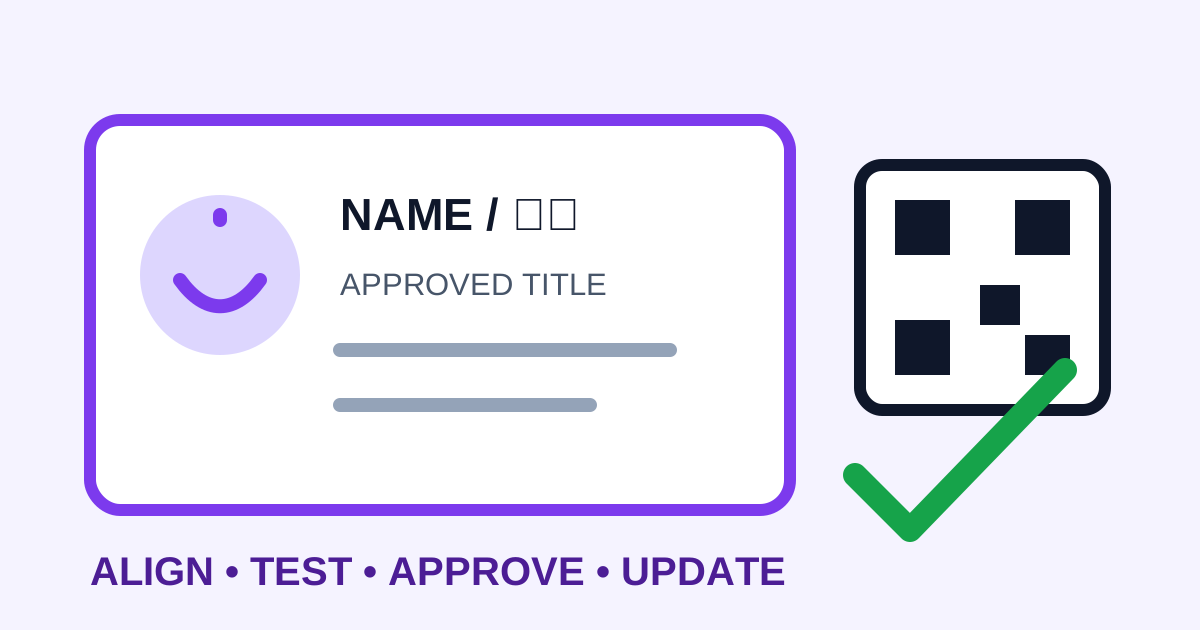
Align names, title, company details, QR contacts, and profile claims with approved employer records, share only necessary personal data, and retire old versions after any role change.
- Use the employer-approved English and Chinese company name, title, address, and brand assets.
- Confirm how your passport name, preferred name, and Chinese name should appear across cards and profiles.
- Test every phone number, email, URL, and QR code before printing or publishing.
- Remove outdated titles, credentials, and employer branding promptly after a change.
A business card looks simple until two languages, several names, a QR code, and a regulated job title must fit into one accurate identity. Treat the card and every professional profile as controlled company information, not as an informal translation exercise.
Start from approved source records
Ask HR, marketing, or administration for the approved English and Chinese company name, legal entity if required, logo files, color and layout rules, office address, website, switchboard, title, department, and disclaimer. Clarify who approves proofs and which print vendor or profile template the company uses.
Your external title should match the role the employer authorizes you to represent. Do not add professional qualifications, licensed status, directorship, or signing authority without verification. If a promotion or transfer changes the role, coordinate the profile update with the performance review and promotion guide.
Resolve personal-name conventions
Decide how the passport name, preferred working name, and any Chinese name appear. A Chinese name can help colleagues and contacts, but it should not create confusion about identity in contracts, banking, tax, immigration, or regulated records. Ask whether the company directory has a standard order and whether pinyin or tone marks are used.
Keep legal identifiers off ordinary business cards unless genuinely required. Passport number, personal address, birth date, private bank details, and document images do not belong on a general professional profile.
Translate meaning, not just words
Have a competent reviewer check the Chinese title, department, address, product names, and role description. A literal translation can imply different seniority, corporate authority, technical scope, or professional licensing. Keep lines short enough to remain readable in print and on a phone screen.
Where the employer uses an official Chinese website or public company registry entry, follow its approved wording rather than creating a new version. Ask counsel or compliance staff to review language in a regulated sector.
Treat QR codes as live data links
A QR code may point to a WeChat contact, company profile, vCard, website, event page, or digital card. Scan the final code on more than one phone and check the displayed name, avatar, employer, privacy settings, and destination. Avoid QR generators that collect unnecessary contact data or redirect through an unknown service.
If using a personal messaging account for work is optional, consider boundaries and account continuity. The work-device security guide helps separate company and personal access. Never embed passwords, identity documents, private customer lists, or confidential calendar details.
Proof before printing or publishing
Check spelling, title, entity, address, country code, extension, email domain, website certificate, QR destination, font rendering, margins, and print contrast. Ask a colleague to call the number, send a test email, open the URL, and scan the QR from the actual proof.
Order a small test quantity if details may change. Record the approval date and file version. For digital profiles, note every place the same identity appears: email signature, company site, directory, messaging profile, conference bio, social profile, sales deck, and customer portal.
Retire outdated versions
After a title, phone, office, company, or legal-name change, create a controlled update list. Stop using old cards and remove obsolete digital claims promptly. Follow company policy for returning or securely disposing of branded material after departure.
Use the HR personal-record update checklist for changes that also affect payroll, benefits, permits, or official employment records.
Business identity checklist
- Company name, entity, address, logo, and brand rules obtained from an approved source.
- English and Chinese name and title reviewed for meaning.
- No unnecessary passport, home, banking, or other sensitive data included.
- Phone, email, URL, and QR destination tested from the final proof.
- Messaging privacy and personal-versus-work boundaries reviewed.
- Print and digital versions have an approval date and owner.
- Directory, signature, website, bio, and social profiles included in update plan.
- Old cards and profiles retired after role or employer changes.
Employment representation, privacy duties, regulated titles, and advertising rules depend on the role and industry. Confirm case-specific requirements with HR, communications, compliance, or qualified counsel.
Frequently asked questions
Common questions
Should a business card in China be bilingual?
It can be helpful when you work across languages, but follow employer branding and naming guidance. Make each language version accurate rather than relying on an unreviewed machine translation.
Can I put a personal WeChat QR code on my company card?
Ask the employer and consider privacy, record retention, role separation, and account continuity. Use only a QR code you intend to share professionally and test what information it exposes.
Which job title should I use?
Use the title approved by HR or communications and consistent with your actual role. Do not invent seniority, licensed status, or a Chinese title that changes the meaning.
What should I do with old cards after a promotion or departure?
Stop distributing them, update online profiles and signatures, remove employer branding where required, and dispose of obsolete cards securely under company policy.