Daily Life
Bulky Furniture and Appliance Disposal in China: A Guide for Foreign Residents
Dispose of bulky furniture and appliances in China through approved property, recycling, resale, and collection routes while protecting data and documenting handover.
Rules and procedures can change. Check the linked official sources before acting on time-sensitive information.
Quick answer
What you need to know
Ask property management for the approved route, separate reusable and regulated items, protect personal data, and document collection instead of abandoning bulky goods.
- Do not leave furniture, mattresses, appliances, or renovation debris in a corridor, fire exit, bin room, or pavement without approval.
- Ask property management which collector, booking, staging point, time window, fee, and lift rule apply.
- Remove personal records and securely erase connected-device data before resale, recycling, or handover.
- Photograph the item and final handover, keep collector details, and obtain a receipt for paid or high-value disposal.
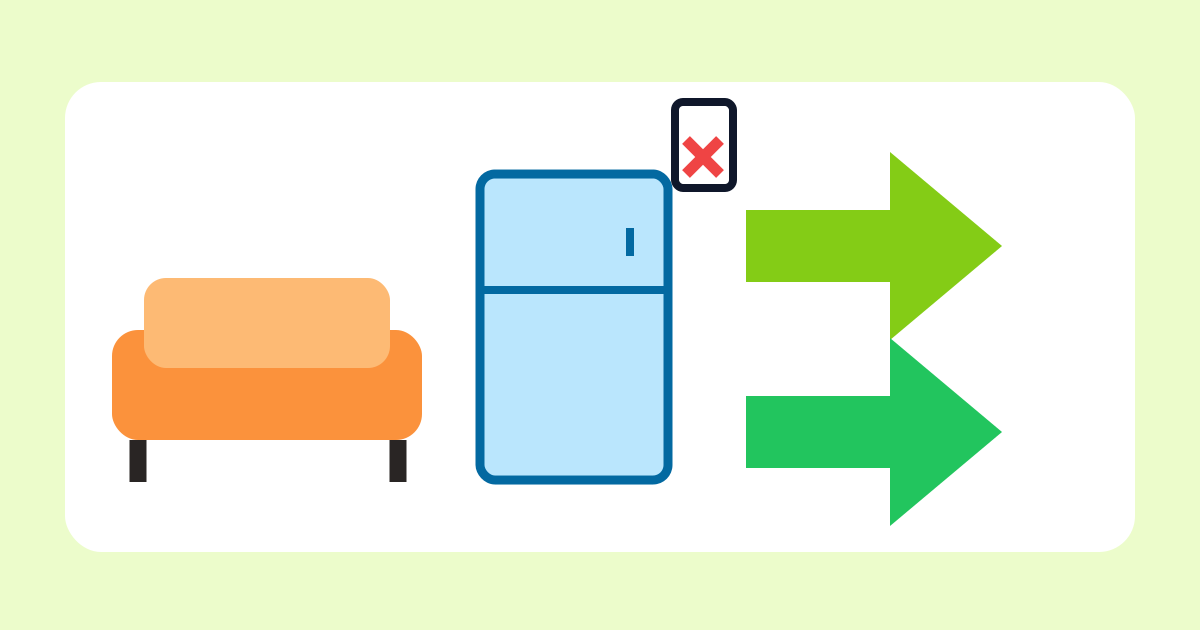
An old sofa, mattress, refrigerator, desk, or washing machine usually cannot follow the same route as everyday household waste. Compound access, lift use, disconnection, collection fees, resale, and data security all need decisions before the item reaches a corridor.
Start with property management
Send a photo, dimensions, floor, lift availability, and desired removal date. Ask whether the compound provides collection, has an approved recycler, designates a staging point, restricts collection hours, requires lift protection, or charges a fee or deposit. Keep fire exits and shared corridors clear while waiting.
Rules vary by municipality and compound. The waste sorting guide explains how to verify local categories; do not rely on a symbol or another city’s practice.
Choose reuse, resale, or disposal
Describe condition honestly. For donation or resale, record brand, model, age, dimensions, defects, repairs, accessories, and whether disassembly is needed. Agree who carries the item, provides tools, protects the lift, and pays if access fails.
For appliances, ask whether a qualified technician must disconnect water, gas, fixed wiring, refrigerant equipment, or wall-mounted units. Do not cut pipes, release refrigerant, or dismantle hazardous components yourself. The appliance repairs and warranties guide can help identify model and service records.
Protect data and identity
Smart TVs, routers, printers, cameras, robot vacuums, and connected appliances may retain Wi-Fi credentials, accounts, voice history, photos, documents, or maps. Sign out, remove accounts and payment methods, delete stored files, remove memory cards, perform the manufacturer’s reset, and verify the welcome screen before handover.
Remove address labels and redact unrelated details from invoices or warranty records. If proof of purchase must transfer, give a copy containing only necessary information.
Control the handover
Confirm collector name, phone, vehicle plate where appropriate, time, price, payment route, and exact scope in writing. Photograph condition before movement and the cleared location afterward. For a paid service, request an invoice or receipt and note any damage to the apartment or common area immediately.
China’s consumer protection framework is an official reference for service information and consumer rights. The practical remedy depends on the agreement and evidence.
Bulky-item disposal checklist
- Item, condition, dimensions, floor, and access route recorded.
- Property-approved collector, staging point, time, and fee confirmed.
- Water, power, gas, wall fixing, and specialist disconnection assessed.
- Reuse or resale description includes defects and missing parts.
- Accounts, payment methods, files, Wi-Fi, and storage media removed.
- Personal data redacted from labels, receipts, and warranty papers.
- Collector, payment, photos, receipt, and handover time retained.
- Common areas checked and keys or access passes recovered.
If an item contains batteries, refrigerant, oil, chemicals, broken glass, or another hazardous component, ask the manufacturer, property manager, or local authority for the appropriate specialist route.
Frequently asked questions
Common questions
Can I leave an old sofa beside the compound bins?
Do not assume so. Bulky-item routes differ by city and compound. Ask property management for the authorized staging point, collection time, fee, and responsible collector.
Can a recycler collect a refrigerator or air conditioner?
Possibly, but confirm the collector, removal scope, refrigerant or installation handling, access rules, price, and receipt. Use qualified technicians for disconnection where required.
Should I give a buyer my original appliance invoice?
Share only what is needed for ownership, warranty, or safety. Redact unrelated names, addresses, phone numbers, payment details, and account information.
What should I do with a smart TV or connected appliance?
Sign out, remove linked accounts and payment methods, factory-reset the device, remove storage media, and verify that personal data is no longer accessible before handover.