Daily Life
Waste Sorting and Recycling in China: Apartment Rules, Collection Times, Batteries, and Bulky Items
A practical English guide for foreign residents handling waste sorting and recycling in China, including apartment compound rules, kitchen waste, boxes, batteries, collection times, and bulky items.
Rules and procedures can change. Check the linked official sources before acting on time-sensitive information.
Quick answer
What you need to know
Foreign residents can avoid daily friction by learning their compound's waste sorting rules, collection times, recyclable handling, kitchen waste process, battery disposal, and bulky-item pickup. Rules vary by city and neighborhood, so local signs and property management matter.
- Check the local bin labels, compound notices, and property-management instructions.
- Separate recyclable, kitchen, hazardous, and residual waste when required.
- Flatten boxes and remove personal information from delivery labels.
- Handle batteries, chemicals, electronics, and bulky furniture separately.
- Ask before leaving large items, renovation waste, or move-out trash in public areas.
Waste sorting is a small daily habit that can create confusion for new foreign residents. The rules may differ from your home country, and they may differ between Chinese cities.
The practical answer is local: read the sign near your bins, ask property management, and build a simple routine for boxes, kitchen waste, batteries, and bulky items.
1. Follow compound rules first
Your apartment compound may have posted signs, collection windows, separate bins, or a staffed waste station. These local instructions matter more than generic advice.
For compound communication habits, read Neighborhood Etiquette in China.
2. Learn the common categories
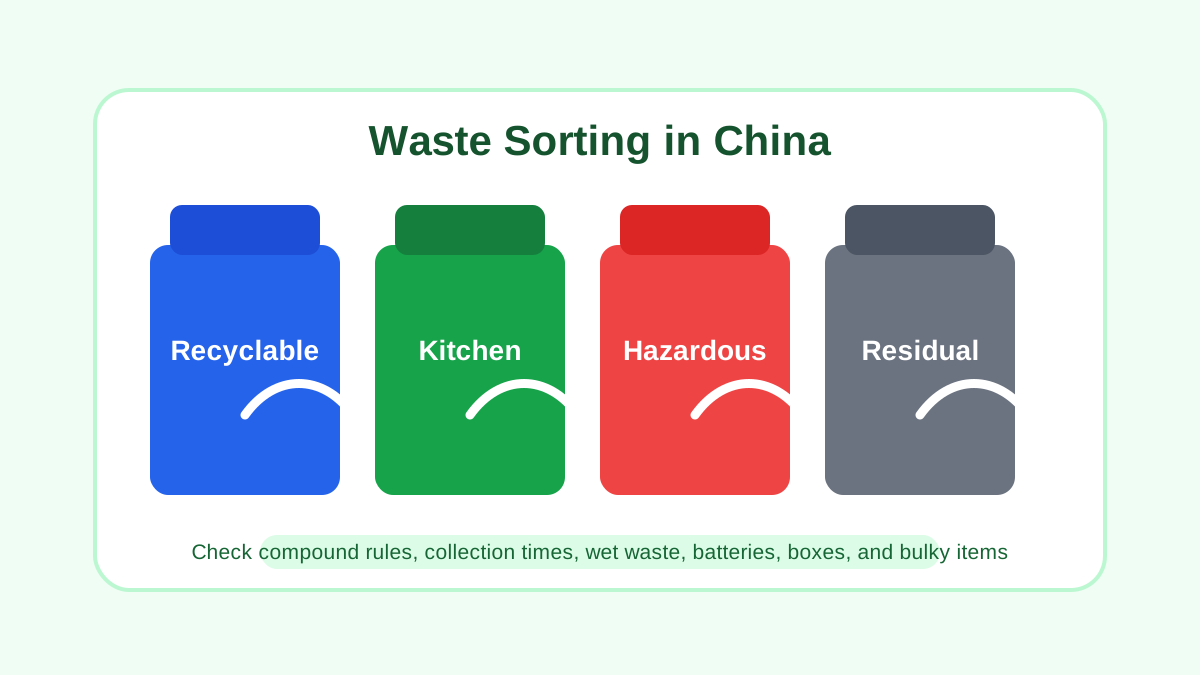
Many systems separate recyclable waste, kitchen waste, hazardous waste, and residual waste. Exact labels, colors, and rules may vary, so check what your building actually uses.
Kitchen waste can be especially local because some compounds require bags to be removed or liquids to be drained.
3. Handle delivery packaging carefully
Online shopping creates many boxes, bags, and labels. Flatten cardboard, remove or cover personal information, and place recyclable packaging in the correct area.
For delivery routines, read Packages and Food Delivery in China.
4. Treat batteries and electronics separately
Batteries, light bulbs, chemicals, old electronics, and appliance parts may require special disposal. Do not put them into kitchen waste or ordinary bins unless local instructions say so.
If the item is valuable, see Secondhand Shopping in China before throwing it away.
5. Ask about bulky items before moving out
Old furniture, mattresses, appliances, and renovation waste should not simply be left in public areas. Ask property management, your landlord, a mover, or a recycling service.
Practical checklist
- I checked bin labels and property-management instructions.
- I know where recyclable, kitchen, hazardous, and residual waste goes.
- I flatten delivery boxes and remove personal information.
- I separate batteries, electronics, and chemicals.
- I ask before leaving bulky items or move-out trash.
Official sources
- State Council: A Guide to Working and Living in China as Business Expatriates
- Ministry of Commerce: Guide for Business Expatriates
Frequently asked questions
Common questions
Do foreigners need to sort garbage in China?
Yes, in many cities and residential compounds waste sorting rules apply to everyone, including foreign residents.
Are waste sorting rules the same across China?
No. Rules and bin categories can vary by city, district, compound, and building, so check local signs and property-management instructions.
What should I do with delivery boxes?
Flatten boxes, remove or cover personal information, and place them in the correct recyclable area or collection point.
Can I throw batteries in normal trash?
Do not assume so. Batteries and some electronics may require special disposal or hazardous-waste bins depending on local rules.
How do I dispose of old furniture?
Ask property management, landlord, mover, or a recycling service before leaving bulky items in shared areas.