Working in China
Breastfeeding and Returning to Work in China: A Planning Guide for Foreign Employees
A practical planning guide for foreign employees returning to work while breastfeeding in China, covering HR conversations, pumping space, milk storage, commuting, travel, and medical support.
Rules and procedures can change. Check the linked official sources before acting on time-sensitive information.
Quick answer
What you need to know
A smoother breastfeeding return to work begins before the first day back: confirm current local and employer rules with HR, agree on time and a private hygienic space, test storage and transport, and prepare backup plans for meetings, travel, and supply concerns.
- Start the HR conversation before returning and confirm current local rules and company policy.
- Agree on a private hygienic space, access times, refrigeration, cleaning, and labeling.
- Test the full pump, storage, commute, and handover routine in advance.
- Plan for long meetings, site visits, business travel, power outages, and forgotten equipment.
- Contact a qualified clinician for pain, fever, breast redness, feeding concerns, or other symptoms.
Returning to work while breastfeeding is a logistics project as much as a personal decision. A written plan for time, privacy, cleaning, storage, and unexpected schedule changes can remove much of the daily friction.
This guide does not replace medical or employment advice.
1. Start before your return date
Contact HR and your manager several weeks ahead. Confirm the expected return date, working hours, current national and local rules, company policy, available lactation space, access procedure, and how breaks will be handled.
For the wider leave and return timeline, read Maternity and Parental Leave Planning in China.
2. Inspect the space
Ask for a private, hygienic, lockable area that is not a toilet. Check the chair and surface, electrical outlet, handwashing access, ventilation, refrigerator arrangement, room booking, and who can enter.
Agree on a simple privacy signal and a backup room when the usual space is occupied.
3. Test the complete routine
Before returning, practice packing, pumping, labeling, chilling, transporting, cleaning, and handing off milk. Time the process realistically, including the walk to the room and equipment setup.
Ask a qualified clinician or lactation professional for personalized advice on pumping frequency, storage, feeding, medication, or supply.
4. Make a workday schedule with buffers
Place provisional sessions around important meetings, then identify which meetings can move and who can cover urgent work. Tell only the colleagues who need operational information; you do not need to discuss private medical details broadly.
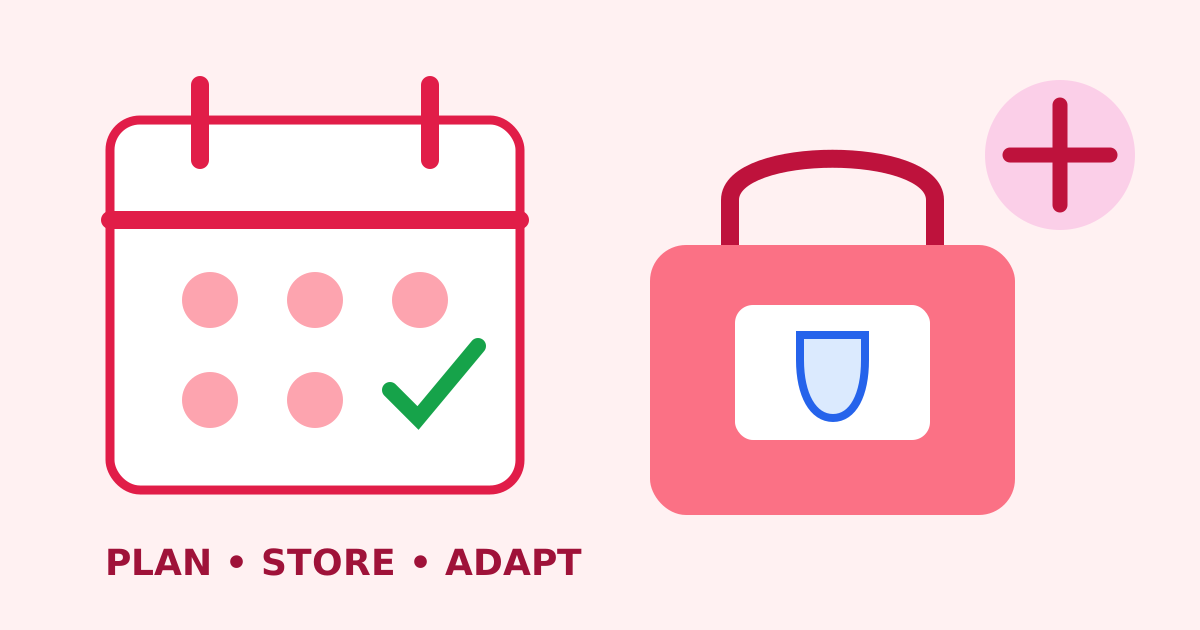
Keep backup supplies at work: compatible parts, storage bags or containers, labels, clean cover, charger or batteries, and a cool bag.
5. Plan exceptional days
For site visits and business travel, check private-space access, refrigeration, electricity and adapters, hotel facilities, road or rail timing, airport screening, and airline rules. See Business Travel in China for Foreign Employees for the wider trip checklist.
Have a plan for a delayed commute, refrigerator failure, forgotten pump part, or unexpectedly long meeting.
Health and escalation
Seek prompt advice from a qualified clinician if you have fever, significant pain, breast redness, flu-like symptoms, nipple injury, or concerns about the baby’s feeding or growth. Do not rely on workplace guidance for clinical decisions.
If there is disagreement about time, pay, leave, privacy, or facilities, ask HR to document its interpretation and verify it with the competent local authority or a qualified employment adviser.
Return-to-work checklist
- Return date, schedule, and current policy confirmed
- Private space inspected and backup identified
- Cleaning, labeling, refrigeration, and transport tested
- Calendar buffers and meeting coverage arranged
- Spare parts and cool bag stored at work
- Travel and power-outage backup prepared
- Clinician and HR escalation contacts saved
Official sources
- China government: Guide to Working and Living in China
- National Health Commission
- Ministry of Human Resources and Social Security
Leave and breastfeeding arrangements may vary by location and employer. Confirm current rules with HR and the competent local authority, and obtain medical guidance from a qualified clinician.
Frequently asked questions
Common questions
When should I discuss pumping at work with HR?
Ideally several weeks before returning, so space, access, scheduling, privacy, and storage can be agreed without a first-day crisis.
What should a pumping space include?
A private lockable area, seat, clean surface, power access if needed, nearby handwashing, and a clear arrangement for safe milk storage.
Can I store milk in a shared refrigerator?
Discuss workplace rules and use sealed, clearly labeled containers in a clean secondary bag. Ask a clinician for storage guidance suited to your circumstances.
How should I handle business travel?
Plan timing, private spaces, power adapters, cold storage, hotel refrigeration, transport restrictions, and a backup option before departure.
Who should confirm my legal entitlement?
Ask HR and the competent local human-resources or labor authority, or consult a qualified employment adviser, because implementation and local rules can change.