Daily Life
Short-Term Luggage Storage in China: Lockers and Left-Luggage Guide
Store luggage temporarily in China with practical checks for identity, hours, item restrictions, locker size, access codes, receipts, and missed collection.
Rules and procedures can change. Check the linked official sources before acting on time-sensitive information.
Quick answer
What you need to know
Use an authorized facility, confirm document and item rules, photograph the bag and receipt, protect the access credential, and collect well before closing or departure.
- Verify the facility, opening hours, accepted identification, price, maximum period, and retrieval method.
- Keep passports, medicine, valuables, batteries, and essential travel items with you unless rules clearly allow otherwise.
- Photograph bag condition and retain the locker number, receipt, order, and support contact.
- Build extra collection time before a train, flight, hotel transfer, or venue closure.
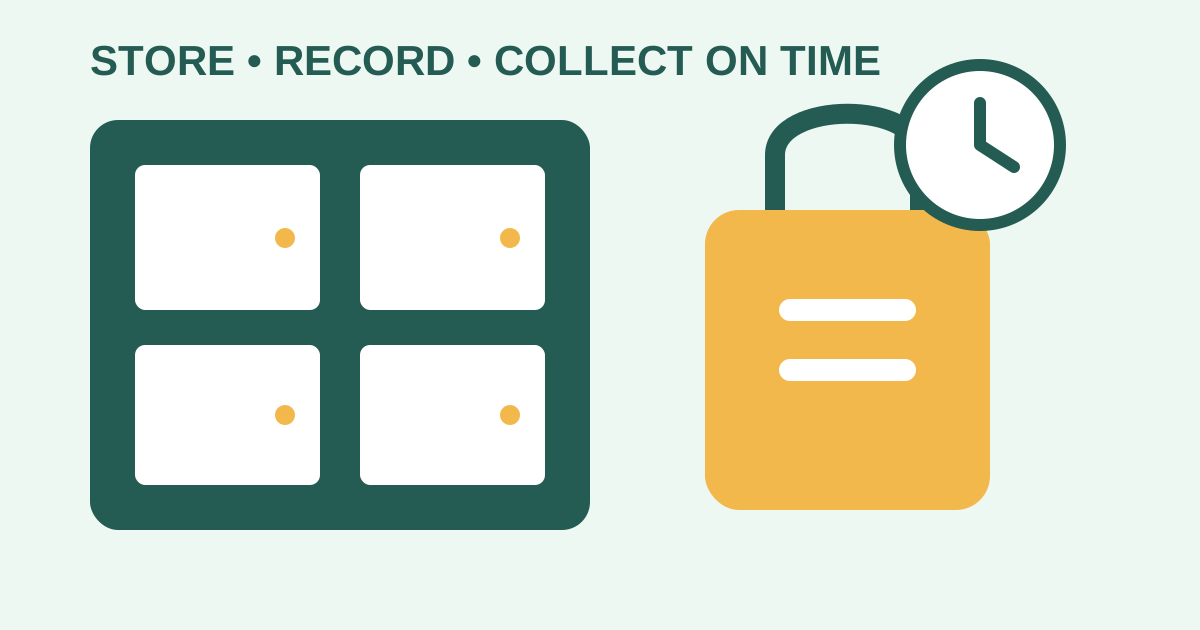
Short-term storage can bridge a hotel checkout, late train, appointment, museum visit, or apartment handover. In China, the service may be a staffed left-luggage counter, station locker, hotel hold, venue cloakroom, or app-arranged shop. Each has different access and liability rules.
Choose an authorized location
Prefer a staffed hotel, transport operator, venue, or clearly identified commercial service with visible terms and support. Confirm the exact location, public opening hours, security-screening access, and whether you must hold a ticket or booking to re-enter.
Do not assume a station shown on a map is accessible from both sides of security. The train travel guide can help you plan terminal time.
Confirm identity, size, and price
Ask whether the service accepts a passport, foreign phone number, international payment card, or supported mobile wallet. Check locker dimensions, oversize-bag handling, hourly or daily price, maximum period, late fee, overnight policy, and closing time.
Save a screenshot of the terms and customer-service contact. For an app-arranged location, confirm the shop name and street address in Chinese before separating from your bag.
Separate essential and restricted items
Keep your passport, wallet, phone, keys, medicine, travel tickets, work access credentials, and essential child-care items with you. Read restrictions for batteries, electronics, food, liquids, fragile goods, valuables, dangerous items, and anything illegal. Do not conceal an item to make it fit the rules.
Photograph the closed bag and its existing condition. Use a luggage tag that provides a contact route without exposing unnecessary personal information.
Protect retrieval credentials
Save the locker number, counter receipt, order number, collection code, deadline, and support contact in two secure places. Do not post a QR code or PIN in a public group. At collection, inspect seals, zippers, wheels, and contents before leaving the facility.
If a bag is missing or damaged, notify the operator immediately and preserve receipts, photographs, communications, and value evidence. For transport-related loss, the lost property guide explains the next record-keeping steps.
Luggage storage checklist
- Authorized operator and exact location verified.
- Re-entry, hours, and collection deadline confirmed.
- Passport and payment support checked.
- Size, price, late fee, and liability terms saved.
- Restricted items removed.
- Bag condition photographed.
- Receipt, locker number, and code protected.
- Collection buffer added before onward travel.
For transport policy information, consult the relevant operator and China’s Ministry of Transport. Local facilities control their own storage operations and restrictions.
Frequently asked questions
Common questions
Can foreigners use luggage lockers in China?
Availability and identity support vary by operator and location. Confirm whether the kiosk or staffed counter accepts your passport and payment method.
Can I leave my passport in stored luggage?
Keep the original identification and other essential documents with you unless a specific lawful process requires otherwise. You may need the passport for travel or collection.
What items are usually restricted?
Rules vary, but dangerous, illegal, leaking, perishable, fragile, high-value, and certain battery-powered items may be prohibited. Read the facility's current list.
What if I lose the locker code or receipt?
Contact the official operator immediately. Expect identity and ownership checks; never ask a stranger to bypass the lock or kiosk.