Daily Life
Sending Salary Savings Abroad from China: A Document Checklist for Foreigners
A practical guide for foreigners remitting legally earned salary savings from China, covering bank checks, income and tax records, beneficiary details, fees, limits, and fraud prevention.
Rules and procedures can change. Check the linked official sources before acting on time-sensitive information.
Quick answer
What you need to know
Ask your bank for its current remittance checklist, keep salary and tax evidence organized, verify beneficiary details and total fees, and use regulated channels rather than informal exchanges.
- Bank procedures and document checks can differ by branch, currency, amount, and source of funds.
- Keep employment, payslip, tax, and bank-credit records that show where the money came from.
- Confirm exchange rate, sending fee, intermediary charges, and receiving-bank deductions.
- Use regulated providers and confirm tax or foreign-exchange questions with the bank and qualified advisers.
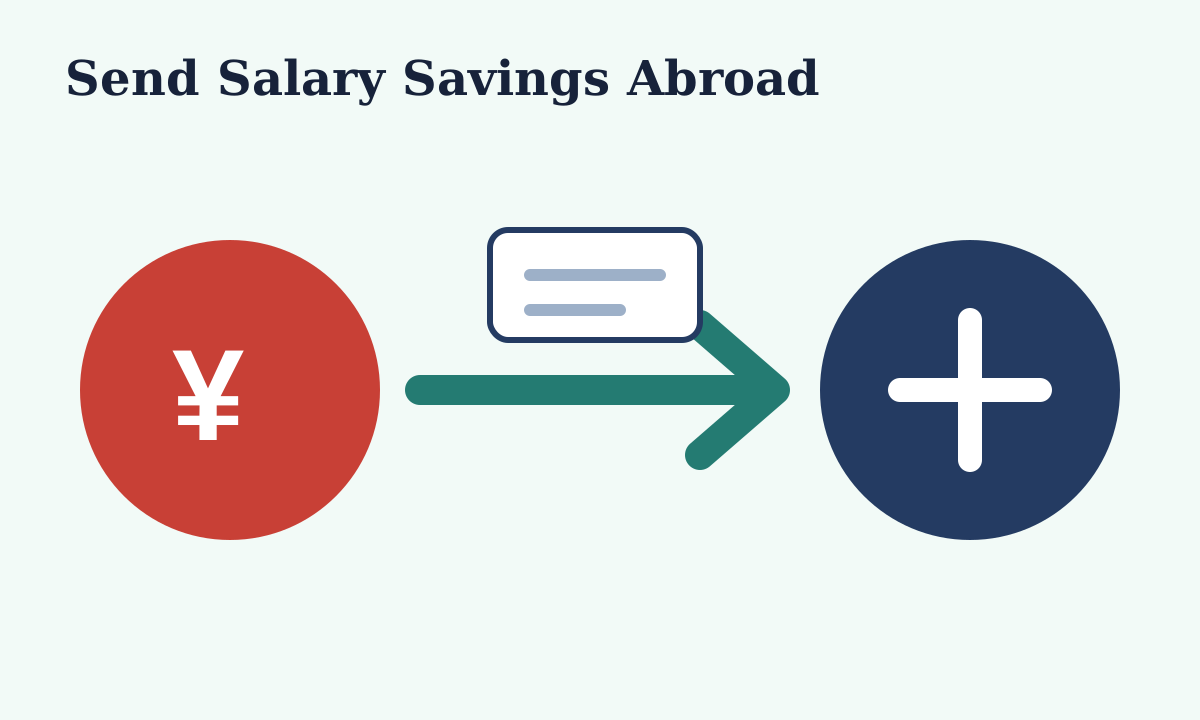
Foreign employees often want to send part of their China salary to an overseas mortgage, savings account, family member, or investment account. The safest approach is to make the source of funds easy to verify and ask the sending bank for its current procedure before the transfer becomes urgent.
This is general administrative information, not financial, tax, or legal advice. Banks and authorities decide what applies to a particular transaction.
1. Ask the bank before collecting documents
Contact the branch or service channel that handles cross-border remittances. Explain that you are a foreign employee sending legally earned salary savings and state the destination country, currency, approximate amount, and beneficiary relationship.
Ask whether the process is available online or requires a branch visit, whether an appointment is needed, and which originals or recent records it expects.
2. Build a source-of-funds file
A clear evidence chain can connect:
- your identity and lawful status;
- your employment;
- gross salary and payroll deductions;
- tax paid or reported;
- salary credits into your bank account; and
- the amount requested for remittance.
Possible documents include a passport, work and residence documentation, employment contract or employer letter, payslips, individual income tax records, and bank statements. For payroll organization, use How to Read a Payslip in China.
3. Check beneficiary details carefully
Obtain the receiving bank’s exact requirements. These may include the beneficiary’s legal name and address, account number or IBAN, bank name and address, SWIFT/BIC, routing code, transfer purpose, and intermediary-bank details.
Compare every character before submitting. A mismatch can cause delay, rejection, extra charges, or a difficult recall.
4. Compare the full transfer cost
Ask about:
- the quoted exchange rate and how long it is valid;
- currency conversion spread;
- the sending bank’s fee;
- correspondent or intermediary charges;
- receiving-bank fees;
- who bears charges; and
- the expected arrival time.
For a large or recurring payment, send a modest test transfer first if practical. Confirm that the beneficiary account can receive the currency and payment purpose.
5. Avoid shortcuts and fraud
Do not use unregulated money changers, another person’s account, invented invoices, or deliberately divided payments intended to avoid review. These arrangements can expose you to fraud, frozen funds, compliance problems, and no reliable recovery route.
Never share SMS codes, banking passwords, or remote screen access. Verify a bank request using an independently sourced official phone number.
6. Keep the final record
Save the application, exchange confirmation, transfer receipt, bank reference, fee details, and beneficiary credit. If the payment is delayed, the sending bank may need its reference to trace the transfer.
If your tax record seems incomplete, review China Tax Return for Foreigners and speak with payroll or a qualified tax adviser before assuming a correction.
Overseas salary transfer checklist
- I asked my bank for the current case-specific checklist.
- My identity and residence documents are valid.
- Employment, payslip, tax, and account records reconcile.
- The beneficiary name and bank codes were independently confirmed.
- I understand the exchange rate and every possible fee.
- I used a regulated channel.
- I did not split or misdescribe the transaction.
- I saved the receipt and bank reference.
- I know whom to contact if the transfer is delayed.
Official sources
- State Administration of Foreign Exchange
- State Taxation Administration: Individual Income Tax
- People’s Bank of China
Foreign-exchange, tax, and bank compliance checks can change. Confirm the process with your bank, payroll team, the relevant authorities, and a qualified tax or financial professional for your circumstances.
Frequently asked questions
Common questions
Can a foreign employee send salary earned in China overseas?
Banks can process eligible cross-border transfers subject to current foreign-exchange, tax, anti-money-laundering, and document checks. Ask your bank about your specific funds and destination.
Which documents might the bank request?
Common requests can include passport and residence documents, employment evidence, payslips, tax records, account statements, and beneficiary information, but the exact checklist varies.
Can I use a friend's account or an informal currency exchange?
Avoid arrangements that obscure the source, owner, or purpose of funds. Use regulated channels and do not split or disguise transactions to bypass checks.
Why did the receiving amount differ from my estimate?
Exchange-rate spreads, sending fees, correspondent-bank charges, and receiving-bank fees can reduce the final credit. Ask for a complete fee explanation.