Daily Life
Public Parking in China: Payments, Time Limits, and a Foreign Driver Checklist
Navigate public parking in China with entrance records, QR payments, plate checks, time limits, receipts, charging bays, and dispute evidence.
Rules and procedures can change. Check the linked official sources before acting on time-sensitive information.
Quick answer
What you need to know
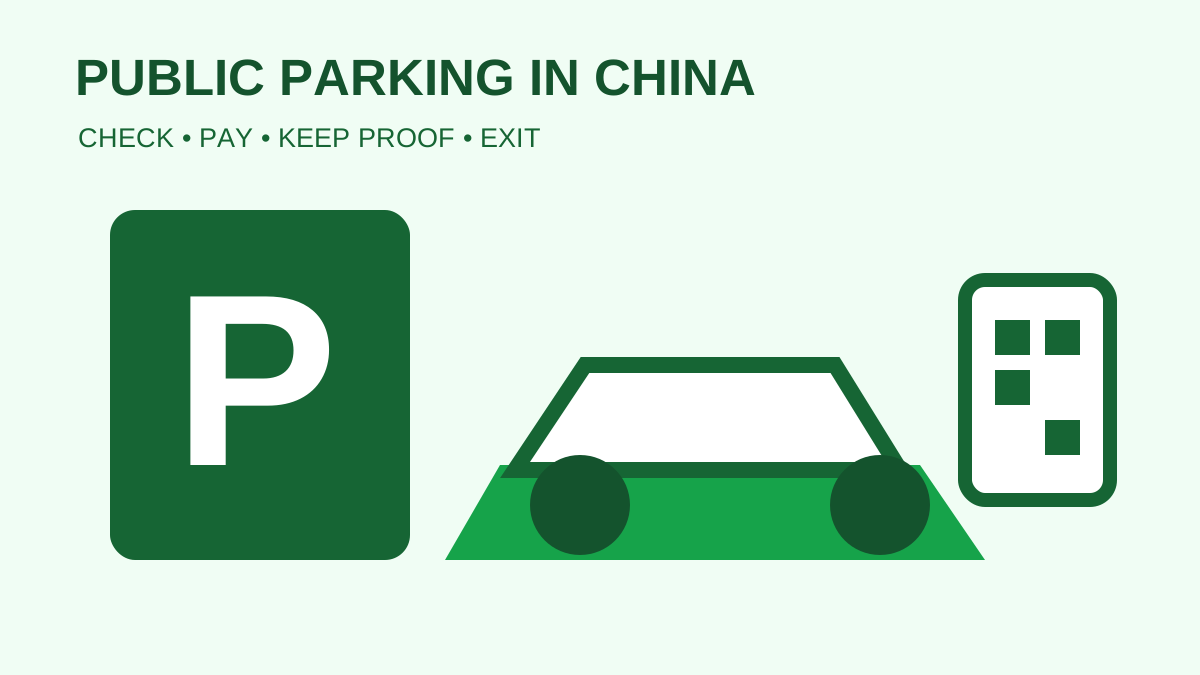
Read the site rules before leaving the car, verify the recorded plate and entry time, use the official payment route, and keep evidence until exit succeeds.
- Confirm whether a space is public, commercial, residential, reserved, temporary, accessible, charging-only, or prohibited.
- Check the captured plate, entry time, tariff, closing time, validation rules, and maximum stay.
- Pay through the site's verified machine, cashier, app, or QR code and retain the receipt until the barrier opens.
- Never assume hazard lights make an illegal or obstructive stop acceptable.
Parking systems in China often combine plate recognition, QR payment, shopping validation, and automated barriers. Details are set by the specific road, car park, compound, or venue, so read the posted rules rather than assuming one system applies everywhere.
Read the space and entrance
Confirm that the bay matches your vehicle and purpose. Look for reserved, accessible, delivery, resident, motorcycle, EV-charging, short-stay, or no-parking markings. At entry, check the displayed plate and time. Photograph the tariff, opening hours, grace period, daily cap, lost-ticket rule, and operator contact.
Roadside parking may use marked zones, attendants, meters, or a local platform. Only pay through the channel on official signage or confirmed by the operator. China’s Ministry of Public Security provides national information; local traffic authorities publish local parking and road rules.
Pay and validate carefully
Check whether a shop, hospital, office, or hotel must validate the plate. Enter it exactly, including province character and letters. Confirm the fee belongs to your session before payment, and keep the receipt until the barrier opens.
If payment fails, avoid scanning a sticker placed over the original code. Use the staffed desk, intercom, official app, or entrance contact. The payment outage guide explains useful fallbacks.
Prevent common surprises
A free period may have a strict exit cutoff. A car park can close while the venue remains open. EV charging fees may be separate from parking and idle fees; coordinate both with the EV charging guide. Never block fire access, gates, sidewalks, bicycle lanes, or another vehicle.
If a barrier fails, do not tailgate another car. Call the operator. For a dispute, preserve the tariff, times, plate record, receipt, and staff conversation. For a clamp or removal, use the official notice or local traffic authority; do not remove equipment yourself.
Parking checklist
- Bay type and restrictions match the vehicle.
- Plate and entry time captured correctly.
- Tariff, grace period, closing time, and maximum stay saved.
- Validation completed before payment.
- Official payment channel and session verified.
- Receipt retained until successful exit.
- Location pin and parked-level photo saved.
- Disputes documented without obstructing traffic.
Rules, enforcement, and payment methods vary by locality and site. Confirm current requirements with signs, the operator, venue, property manager, or local traffic-management authority.
Frequently asked questions
Common questions
Can foreign payment cards pay every parking fee?
Acceptance varies. Keep more than one lawful payment method and ask the operator for an official alternative if the QR or app flow fails.
Why did the fee continue after EV charging stopped?
Charging and parking are often separate services. Ending charging may not end parking or idle fees, so read both tariffs and move promptly.
What if the barrier recorded the wrong plate?
Use the intercom or staffed desk before paying repeatedly. Show the entry record, vehicle details where requested, and timestamped photos.
What should I do if my car is clamped or removed?
Do not damage equipment or confront staff. Record the location and notices, contact the identified operator or traffic authority, and follow the official release process.