Daily Life
Home Appliance Energy Labels in China: A Buying Guide for Foreign Residents
Compare appliance energy labels in China with capacity, annual-use estimates, installation needs, warranties, and total running cost.
Rules and procedures can change. Check the linked official sources before acting on time-sensitive information.
Quick answer
What you need to know
Use the label as one comparison input, match capacity to the household, verify installation and warranty terms, and estimate the full ownership cost.
- Compare products within the same category, standard, and capacity rather than comparing grade numbers alone.
- Record the exact model and photograph its label because showroom cards and online listings can differ.
- Include installation, electricity, water, filters, maintenance, repair, and disposal in total cost.
- Renters should obtain permission before electrical, plumbing, ventilation, wall, or cabinet changes.
Energy labels help compare appliances, but the large grade number is only the start. A refrigerator that is too large, an air conditioner installed badly, or a washer with unsuitable plumbing can cost more even when its label looks efficient.
Compare like with like
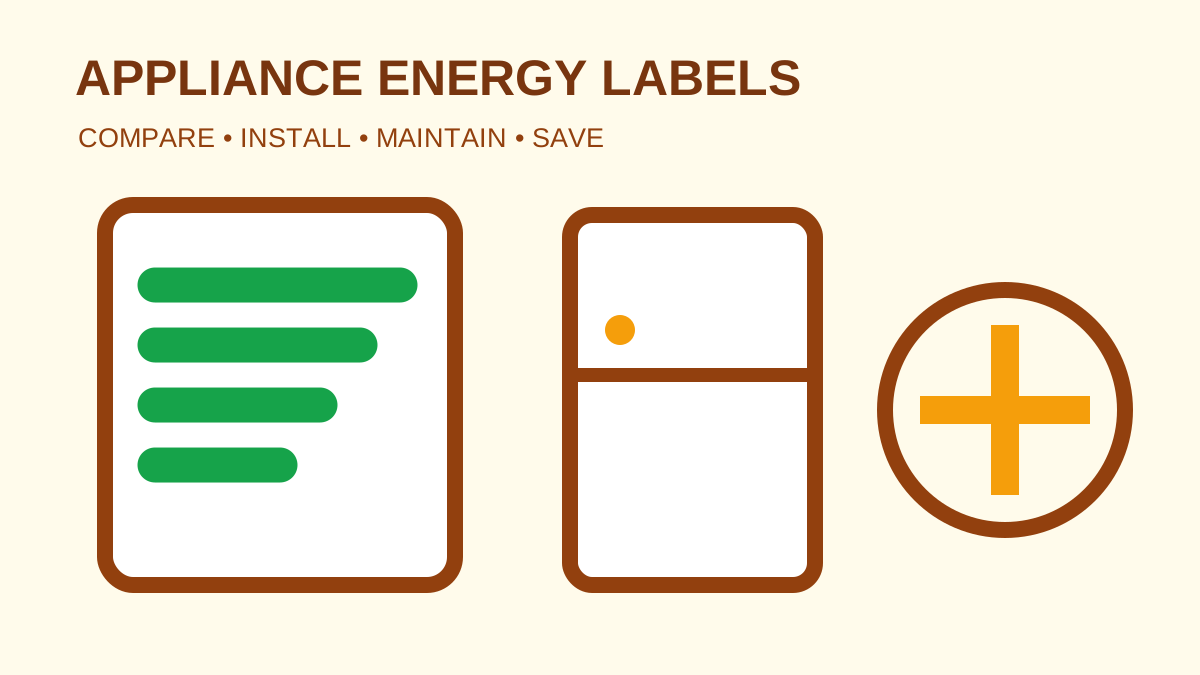
Record the model, capacity, label grade, energy figure, test standard, dimensions, and manufacturing details. Compare only similar types and sizes under the same system. Real consumption depends on room conditions, settings, use, maintenance, and behavior.
China’s State Administration for Market Regulation and Standardization Administration are official starting points. Ask the maker or seller which current standard applies to the exact model.
Calculate total ownership cost
Add purchase, delivery, installation, accessories, electricity or water, consumables, cleaning, maintenance, repair, and removal. Use your local tariff and realistic use. The utility meter guide helps establish a baseline.
For online purchases, save the listing and specifications before checkout. Confirm return conditions for installed products, and read the returns and refunds guide before discarding packaging.
Check the home before buying
Measure doors, lifts, alcoves, clearances, and service access. Confirm voltage, circuit capacity, grounding, outlet, water pressure, drainage, exhaust, and installation location. Never solve a high-power or grounding mismatch with an unverified extension lead or travel adapter.
Renters should obtain written approval for drilling, wiring, plumbing, ventilation, cabinetry, or replacing landlord equipment. Agree who pays, owns the appliance, restores the property, and removes it.
Accept and maintain it
At delivery, match the model and inspect the casing, cable, plug, hoses, accessories, and label. Photograph the serial number. Use an approved installer where required, test functions, and save the invoice, warranty, and service contact.
Follow cleaning and filter schedules. If energy use rises, check settings, seals, filters, ventilation, ice buildup, leaks, and meter records. The appliance repairs guide explains service documentation.
Buying checklist
- Exact model, capacity, dimensions, and label photographed.
- Similar models compared under the same standard.
- Delivery, installation, running, and maintenance costs estimated.
- Electrical, plumbing, ventilation, and access checked.
- Landlord or property approval obtained where needed.
- Return, warranty, repair, and disposal terms saved.
- Baseline meter use and maintenance dates recorded.
Electrical and gas work can be hazardous. Use qualified installers and confirm requirements with the landlord, property manager, utility, manufacturer, and local authority.
Frequently asked questions
Common questions
Does a Grade 1 label always mean the cheapest appliance to run?
Not by itself. Capacity, test conditions, use, tariff, standby power, and installation affect actual cost. Compare detailed values for similar products.
Can I use an imported appliance in China?
Check voltage, frequency, plug, grounding, power demand, certification, installation, and warranty with the manufacturer and a qualified electrician.
Should a landlord approve a new appliance?
Get written approval when installation changes wiring, plumbing, ventilation, walls, cabinets, or landlord-owned equipment.
What records should I keep?
Keep model and serial numbers, label photo, order, invoice, warranty, installer record, manuals, maintenance log, and landlord approval.