Family & Education
Children's Playdates and Sleepovers in China: A Guide for Foreign Families
Arrange children's playdates and sleepovers in China with clear supervision, transport, allergy, emergency, privacy, and household expectations.
Rules and procedures can change. Check the linked official sources before acting on time-sensitive information.
Quick answer
What you need to know
A practical parent-to-parent checklist for making informal visits safe, clear, and comfortable across languages and household norms.
- Exchange full addresses, parent contacts, supervision details, and pickup authorization before the visit.
- Discuss allergies, medication, pets, pools, balconies, transport, screens, and household rules directly.
- Start with a short parent-accompanied visit when families do not yet know one another.
- Ask before photographing children or adding parents to group chats.
Informal visits help children form friendships beyond school, but the host home may have unfamiliar building access, pets, food, language, or supervision expectations. A five-minute parent conversation prevents most confusion.
Agree on the basic plan
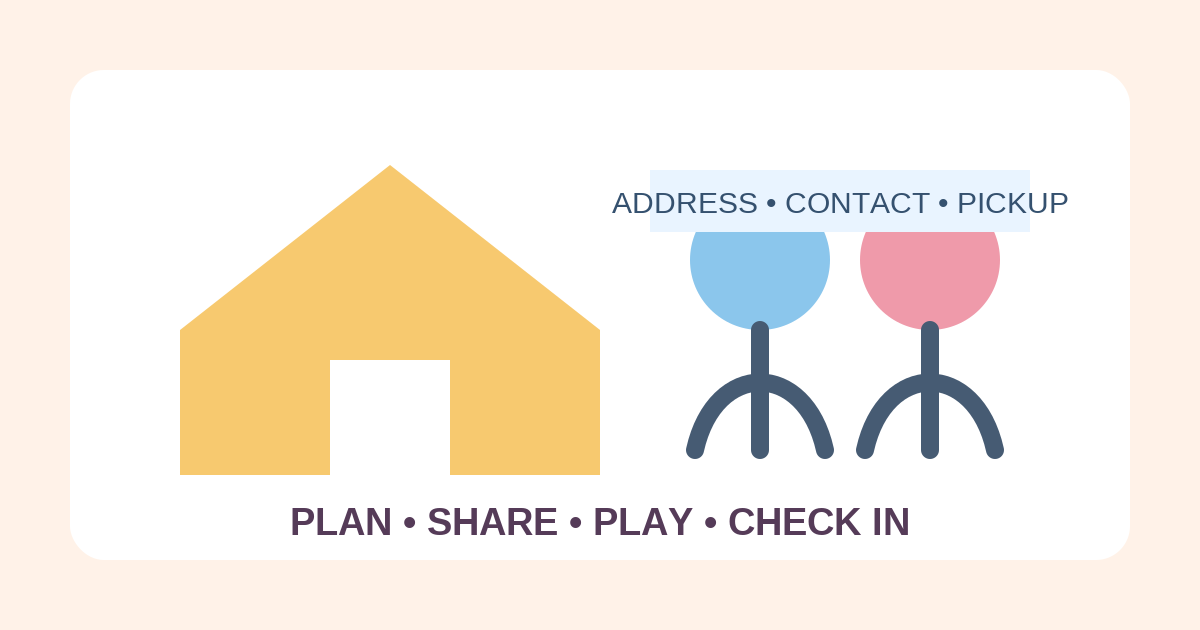
Exchange both parents’ names and phone numbers, the full address in Chinese where available, a map pin, building and unit details, and the gate-access method. Confirm start and end times, who will be home, whether siblings or other guests will attend, and who may collect the child.
For a first visit, consider meeting in a public park or playground or staying for part of the playdate. A sleepover can wait until both families and children are comfortable.
Discuss the home, health, and transport
Mention pets, smokers, balconies, bunk beds, pools, trampolines, cooking plans, and any planned trip outside the compound. Agree on car seats or other restraints before another adult transports the child. Share allergies and dietary needs without expecting a host to infer them. Our food-allergy plan offers a useful framework.
If medication or a health condition is relevant, provide a clear parent-and-clinician plan and verify that the host accepts the responsibility. For an urgent emergency, adults should contact the appropriate service and the parents; the national government publishes general emergency service information, but local access and language support vary.
Agree on screens, gaming, bedtime, internet access, food delivery, spending, and photo sharing. Do not post identifiable images or add families to a chat without permission.
Playdate and sleepover checklist
- Exchange parent contacts, Chinese address, map pin, and gate instructions.
- Confirm supervision, other guests, timing, and authorized pickup.
- Discuss allergies, medication, pets, food, and household hazards.
- Agree on transport and appropriate child restraints.
- Set expectations for screens, bedtime, spending, and photos.
- Give the child a way to contact you and permission to leave early.
- Confirm any plan change directly with a parent.
This is general family-safety information, not medical advice. Parents remain responsible for deciding what is appropriate and should consult clinicians or other professionals about individual needs.
Frequently asked questions
Common questions
Are sleepovers common in China?
Practices vary widely by family, culture, age, housing, and school community. A daytime playdate is an easy first step if either family is uncertain.
What information should parents exchange?
Share parent names and numbers, the exact address and map pin, who will supervise, planned transport, pickup time, allergies, emergency instructions, and any relevant household risks.
Can another parent give my child medicine?
Do not rely on informal assumptions. Parents and the child's clinician should define a written plan, and the supervising adult must be willing and able to follow it.
Should children be allowed to travel home alone?
Parents should agree explicitly based on age, route, building access, local conditions, and family rules. Never change the pickup plan without direct confirmation.