Healthcare
Allergy Testing and Specialist Care in China: A Guide for Foreign Residents
Prepare for allergy evaluation in China, compare testing options, organize records, and build a clinician-reviewed action plan.
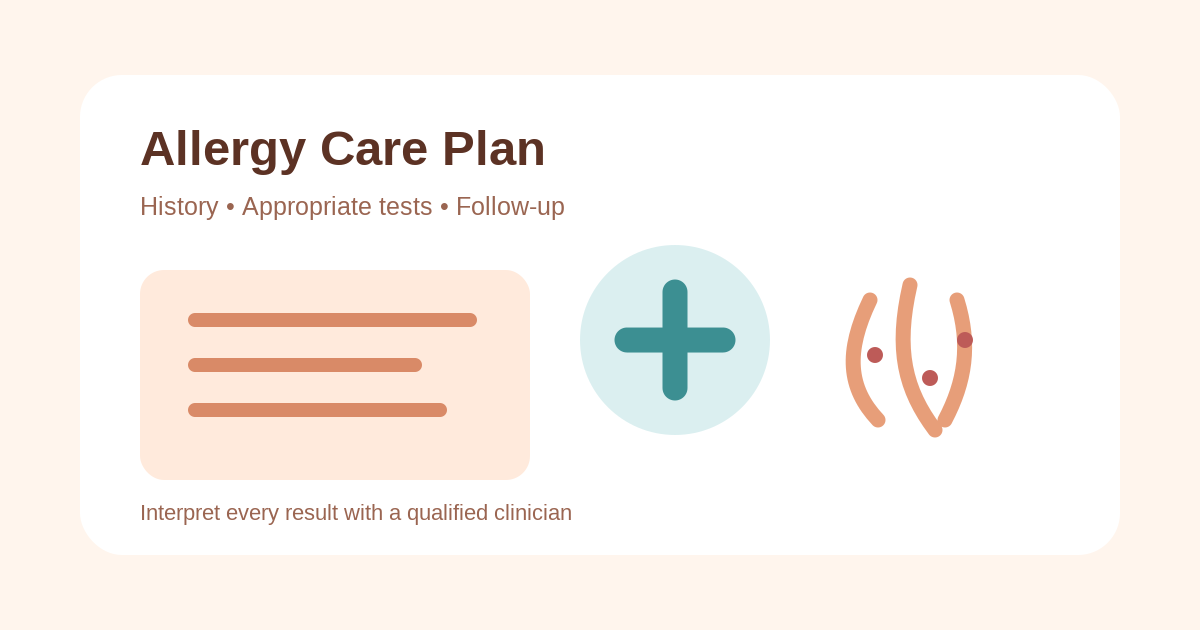
Rules and procedures can change. Check the linked official sources before acting on time-sensitive information.
Quick answer
What you need to know
A practical preparation guide for choosing an appropriate clinic, documenting symptoms, understanding the limits of allergy tests, and leaving with a clear follow-up plan.
- Start with a qualified clinician and a symptom history rather than ordering a broad test package on your own.
- Ask what a proposed skin, blood, challenge, or other test can and cannot establish.
- Do not stop medicines, reintroduce a suspected allergen, or begin a restrictive diet without clinical instructions.
- Leave with written results, an emergency plan when needed, and a follow-up date.
Allergy evaluation is not just a test order. The useful question is whether symptoms, timing, exposures, and clinically appropriate testing point to a diagnosis that changes your care.
Choose the right starting point
Ask a hospital or clinic whether it has an allergy, immunology, respiratory, dermatology, pediatric, or other relevant specialist for your symptoms. Confirm language support, appointment method, expected cost, insurance network, and whether emergency care is available on site.
Use the doctor-visit guide to prepare registration and payment. If symptoms involve a child, coordinate records with the pediatric care guide.
Build a symptom and exposure history
Record what happened, how quickly it started, duration, severity, suspected food or product, quantity, preparation method, exercise, alcohol, infection, location, season, medicines, and treatment response. Bring dated photographs and prior emergency or laboratory records.
List every medicine and supplement. Ask the clinic whether anything should be paused before the visit. Do not stop prescribed treatment without professional instructions.
Ask what each test answers
Skin-prick, blood, patch, lung-function, and supervised challenge tests answer different questions. Ask why the test is proposed, its limitations, preparation, risks, result timing, and how the result will alter the plan. A positive or negative result may not establish or exclude a clinically meaningful allergy by itself.
Avoid deliberately re-exposing yourself at home. Food or medicine challenges should occur only under the conditions directed by a qualified clinician with appropriate emergency support.
Leave with an action plan
Request a written summary of the working diagnosis, triggers to avoid, permitted alternatives, medicine names and doses, emergency warning signs, follow-up, and whether a medical identification card is advisable. Have critical bilingual wording reviewed by the clinician or a qualified medical interpreter.
For severe symptoms such as breathing difficulty, throat swelling, collapse, or rapidly worsening multi-system reactions, seek emergency care and call 120 according to local guidance. This article does not diagnose or treat allergy. Confirm all decisions with a qualified clinician. The National Health Commission publishes official health information and policy updates.
Allergy appointment checklist
- Choose a clinic suited to the symptom pattern.
- Confirm appointment, language, cost, and insurance details.
- Prepare a dated symptom and exposure timeline.
- Bring medicines, prior results, and useful photographs.
- Follow clinic instructions before any test.
- Ask what each result can and cannot show.
- Obtain a written treatment and emergency plan.
- Schedule follow-up for interpretation and adjustment.
Frequently asked questions
Common questions
Can an allergy test diagnose a food allergy by itself?
Not always. Test results must be interpreted with symptoms, exposure history, examination, and sometimes supervised additional evaluation by a qualified clinician.
Should I stop antihistamines before testing?
Only when the clinic gives specific instructions. Different medicines and tests require different preparation, and stopping treatment may be unsafe for some patients.
Are home intolerance tests the same as clinical allergy testing?
No. Products use different methods and may not answer the same clinical question. Ask a qualified clinician whether a test is validated and relevant before relying on it.
What should I bring to an allergy appointment in China?
Bring identification, insurance details, a symptom and exposure timeline, medicine list, prior results, photos when useful, and the original labels of suspected products if safe to carry.